Host Onboarding Design
Problem: Education was front-loaded in onboarding, causing friction in the user experience and significant drop-off in our sales funnel.
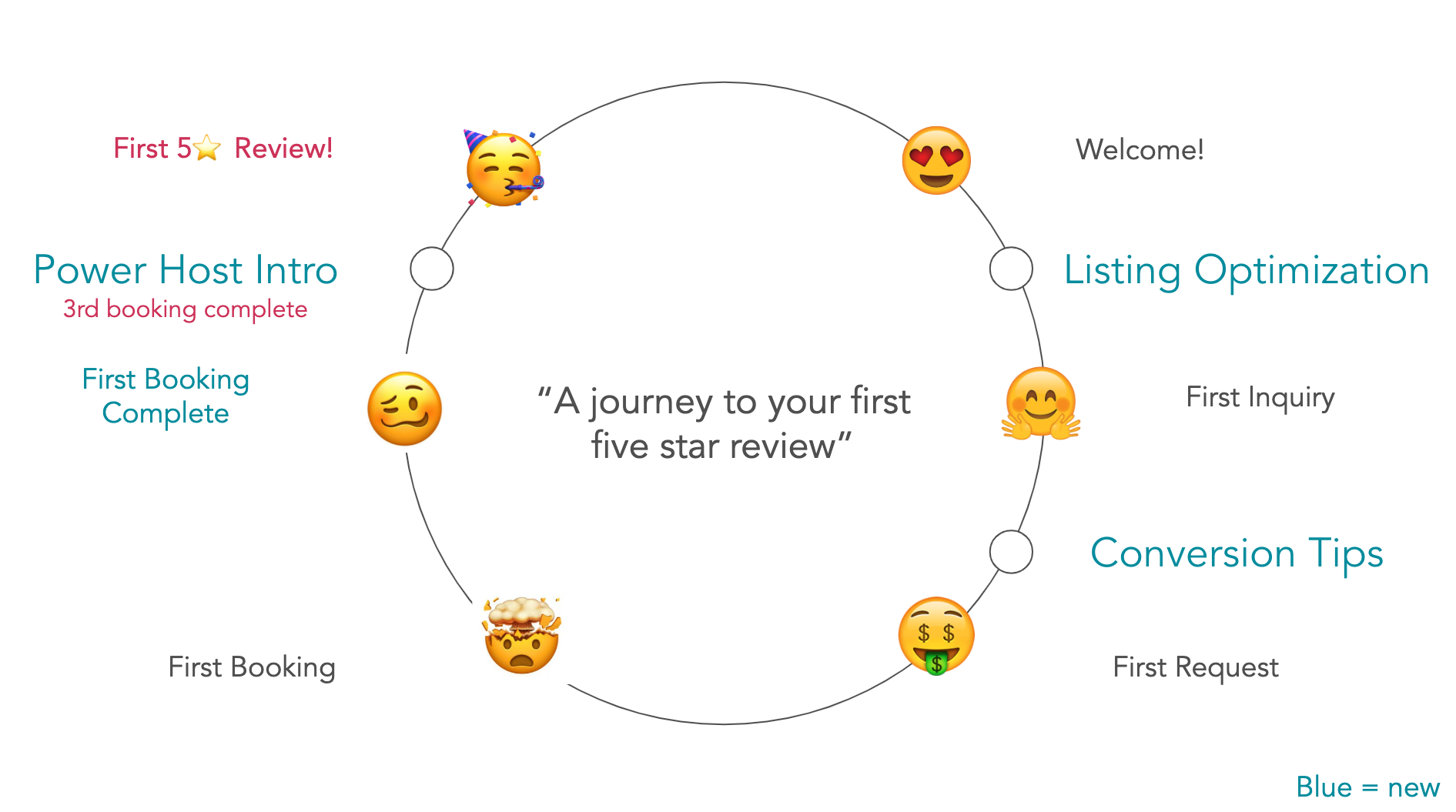
Hypothesis: By mapping the user journey, we can create a more intentional curriculum from sign-up to first five-star review that improves the user experience without sacrificing important education.
My Deliverables: User journey map and information architecture; Revised onboarding tutorial; Lifecycle emails; Blog series; UX copy
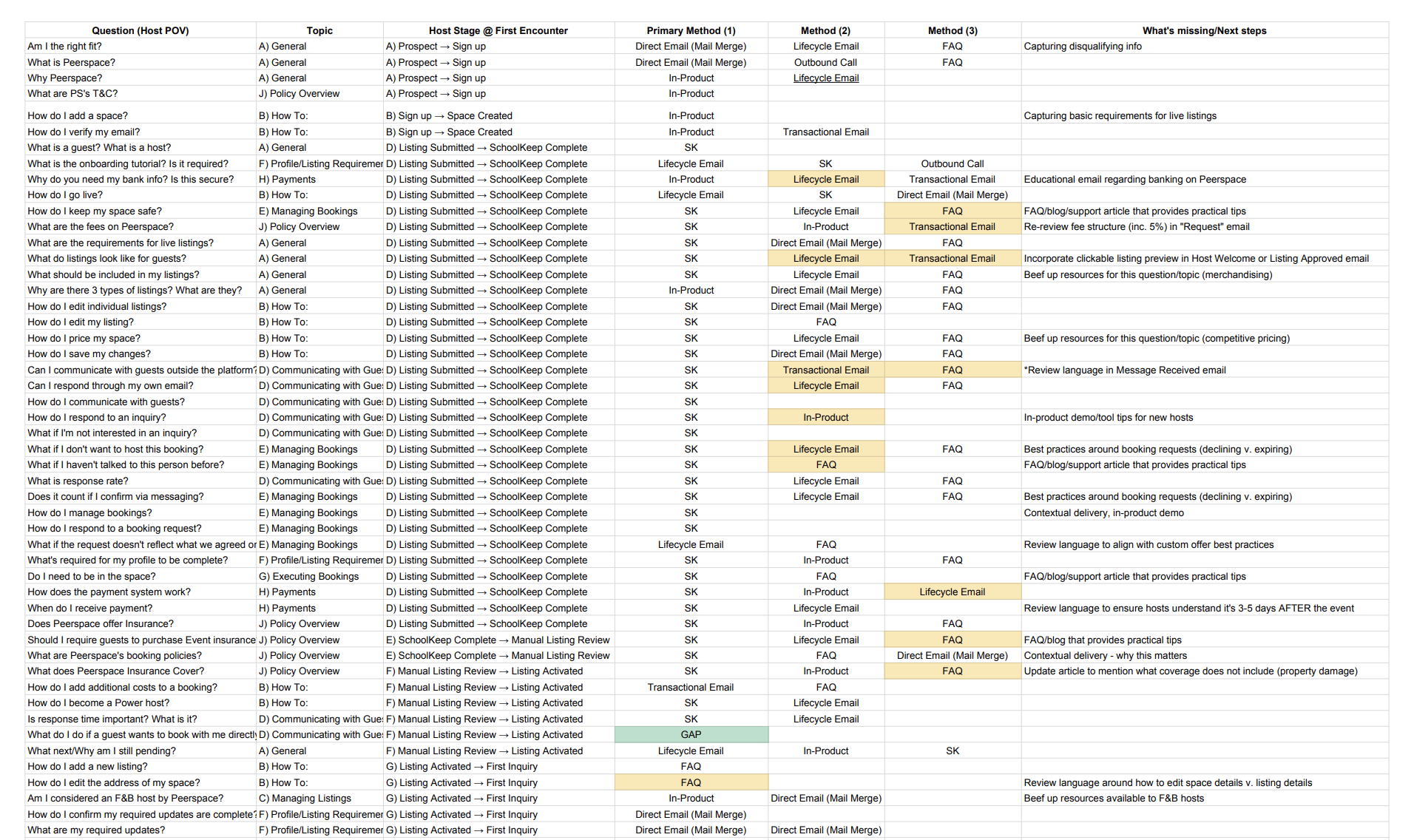
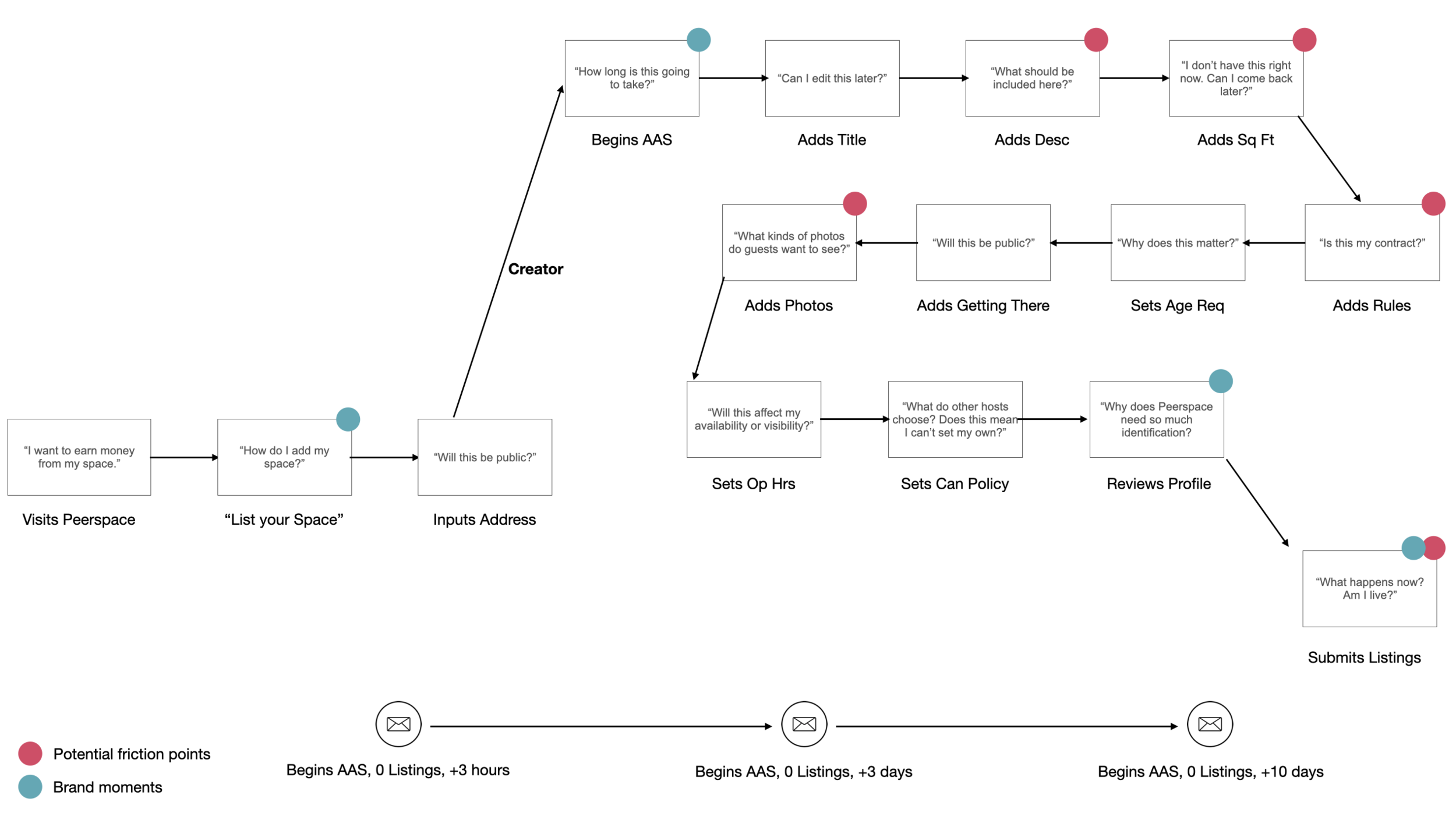
Process: I partnered with our sales team to document all questions a new host might have from sign-up through their first five-star review. With this as our foundation, I mapped the user journey to determine during which stage each question should be answered (and through what medium). From there, I partnered with product and design to relaunch our onboarding curriculum.
Challenges:
This project impacted multiple teams in the company: How can I balance internal needs while still keeping the customer top priority?
Design updates to product were limited: How can we make a meaningful impact given our technical constraints?
Hosts of all experience levels, with incredibly different types of spaces, list on Peerspace: How do we balance the educational needs of such a diverse audience?
Solution:
Redefine internal understanding of onboarding
Focus on improving what we already have to inform a native solution
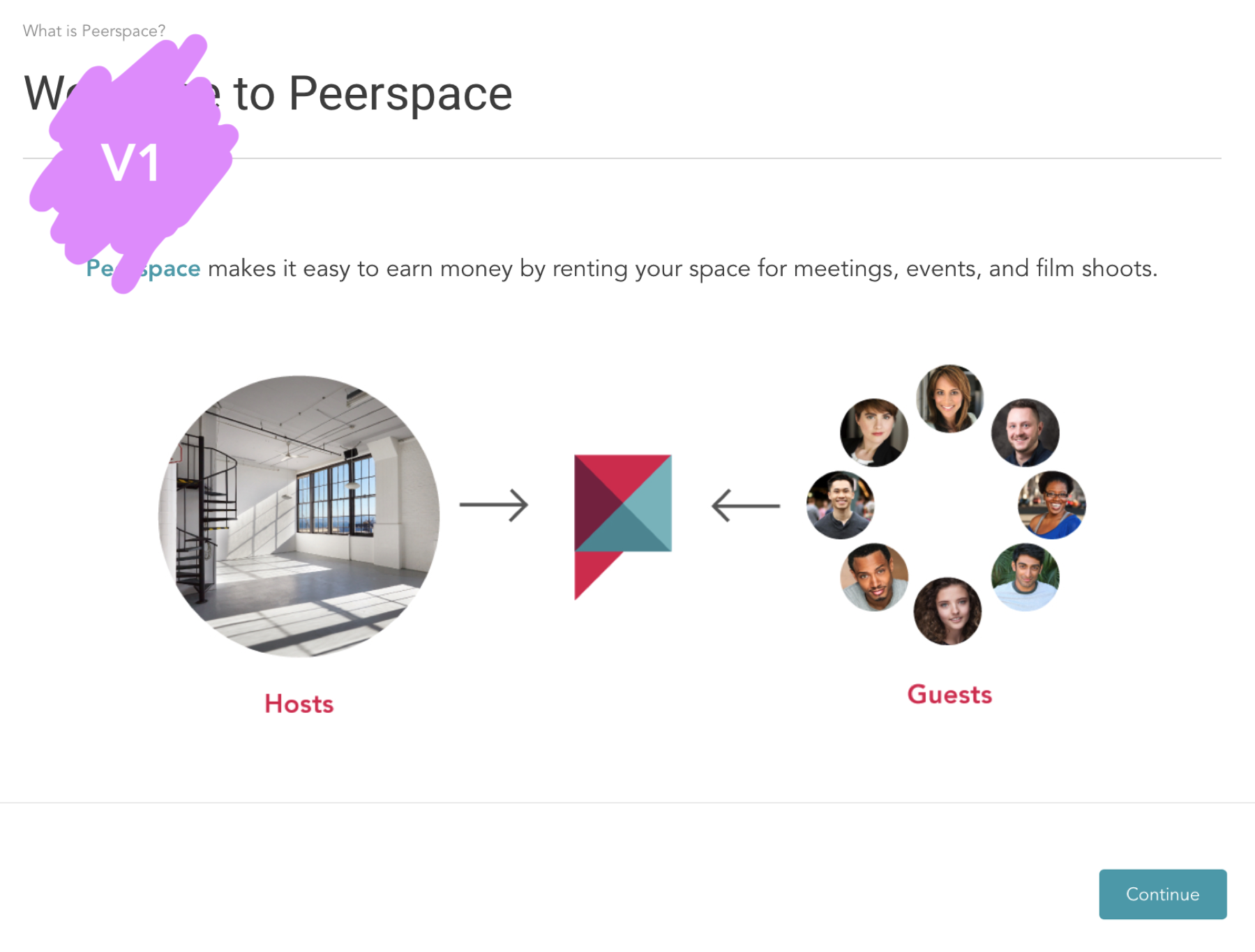
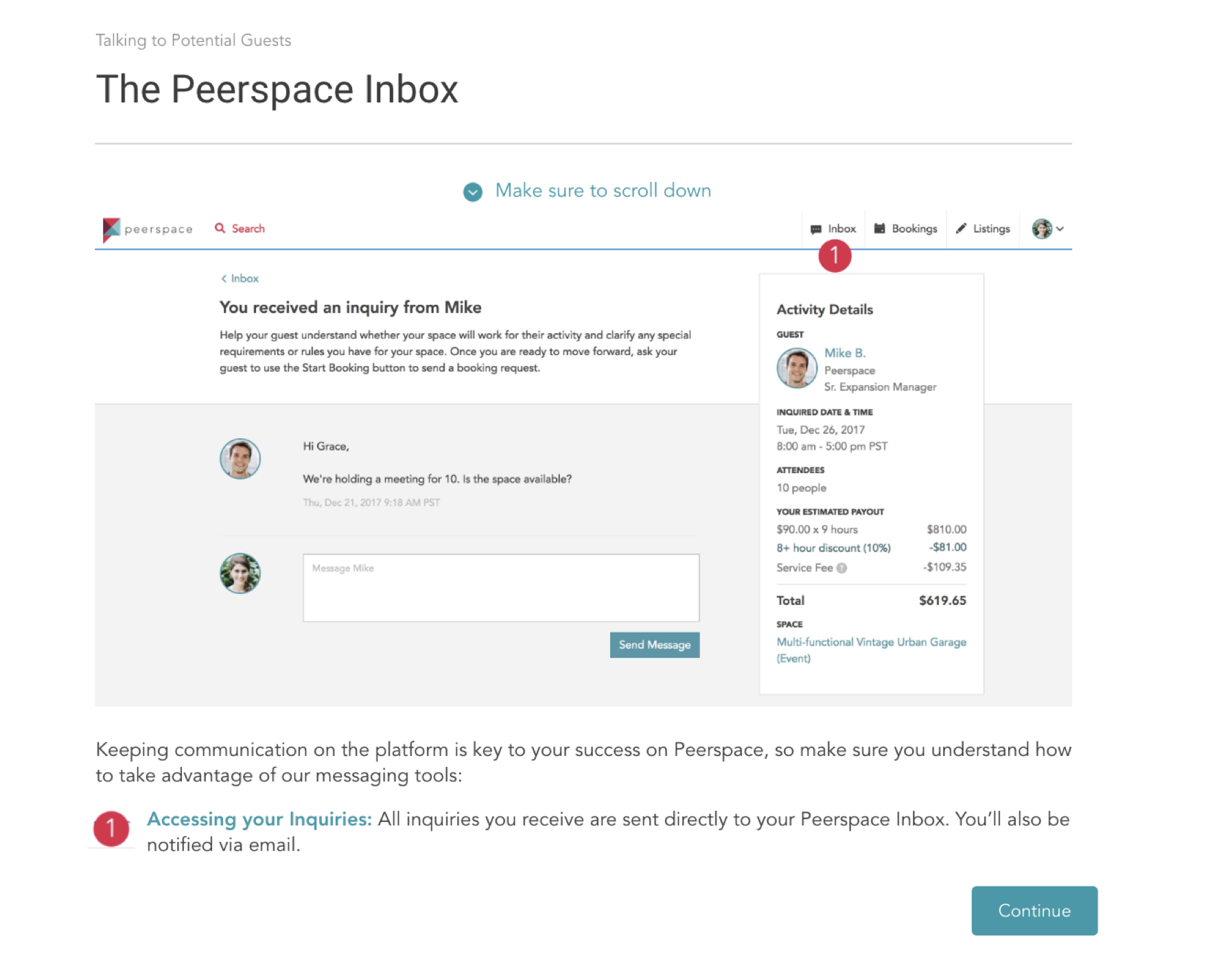
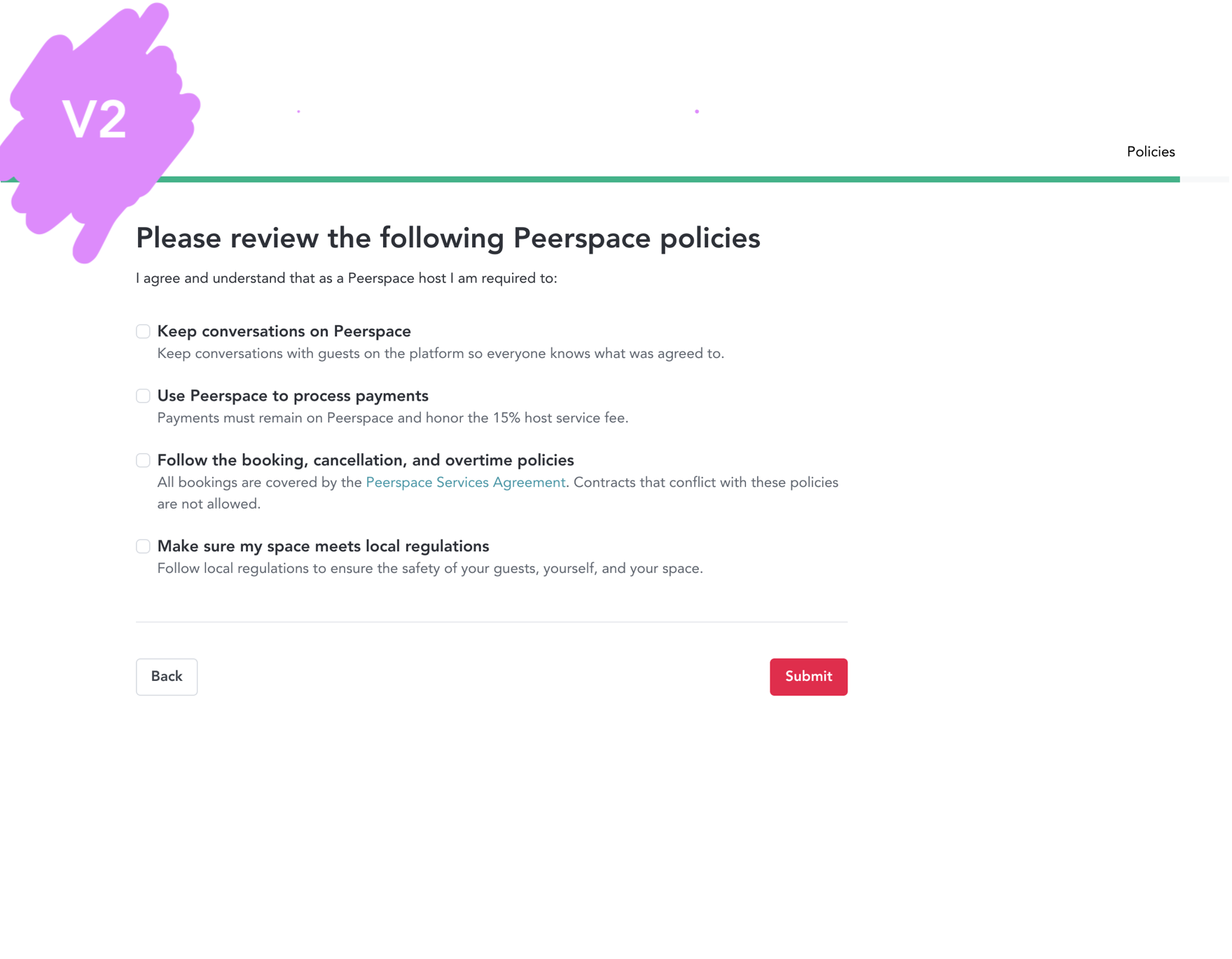
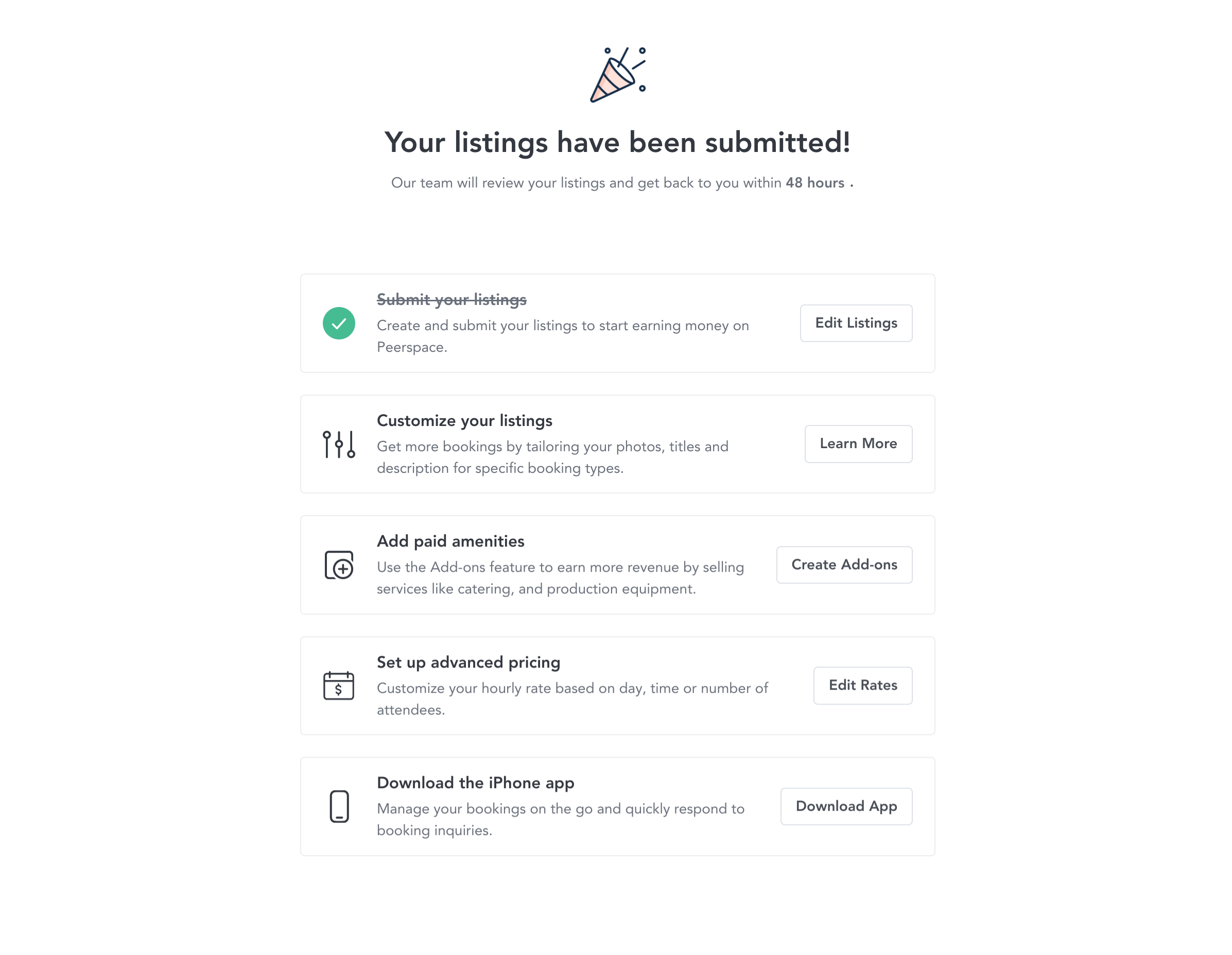
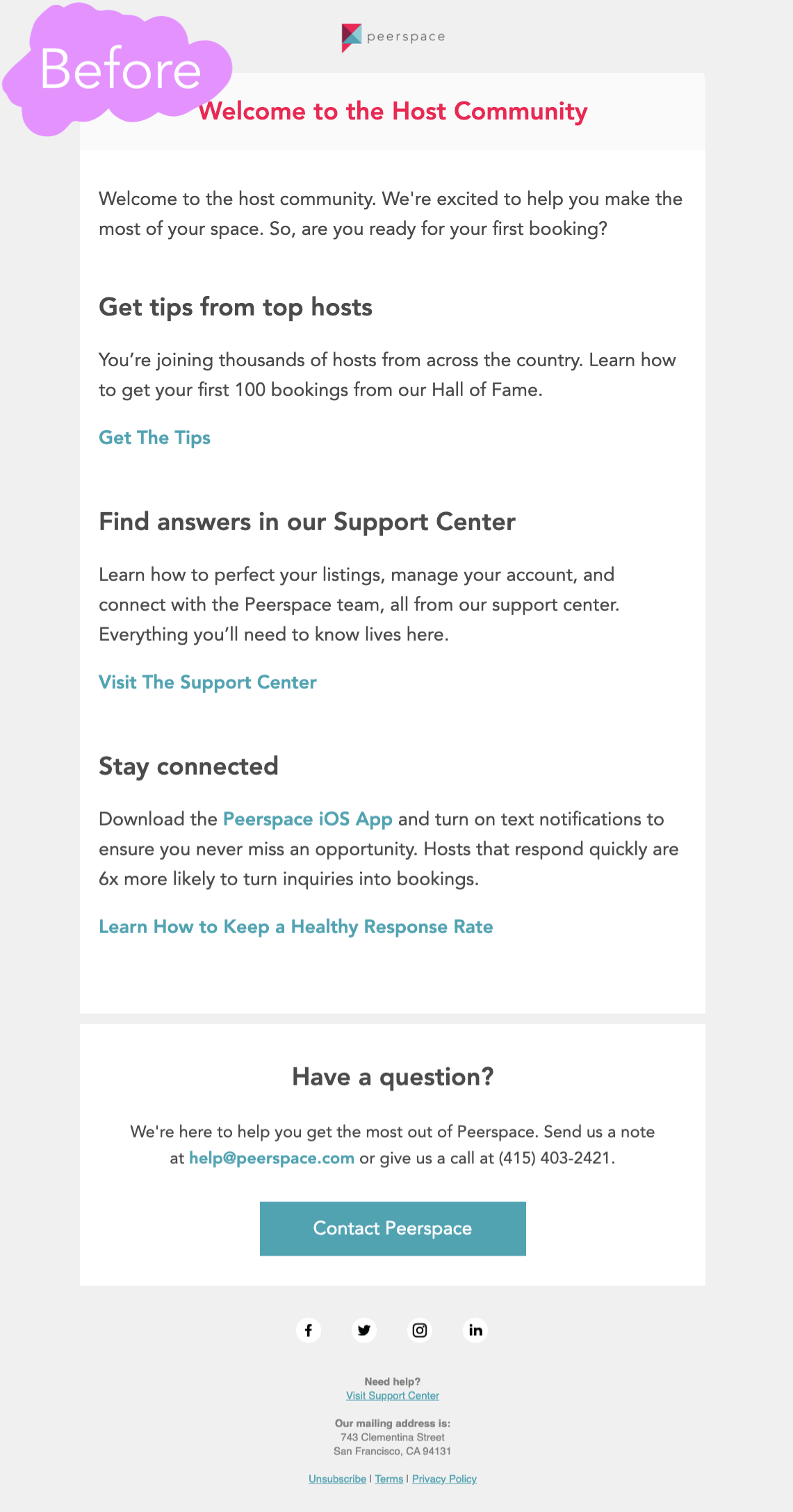
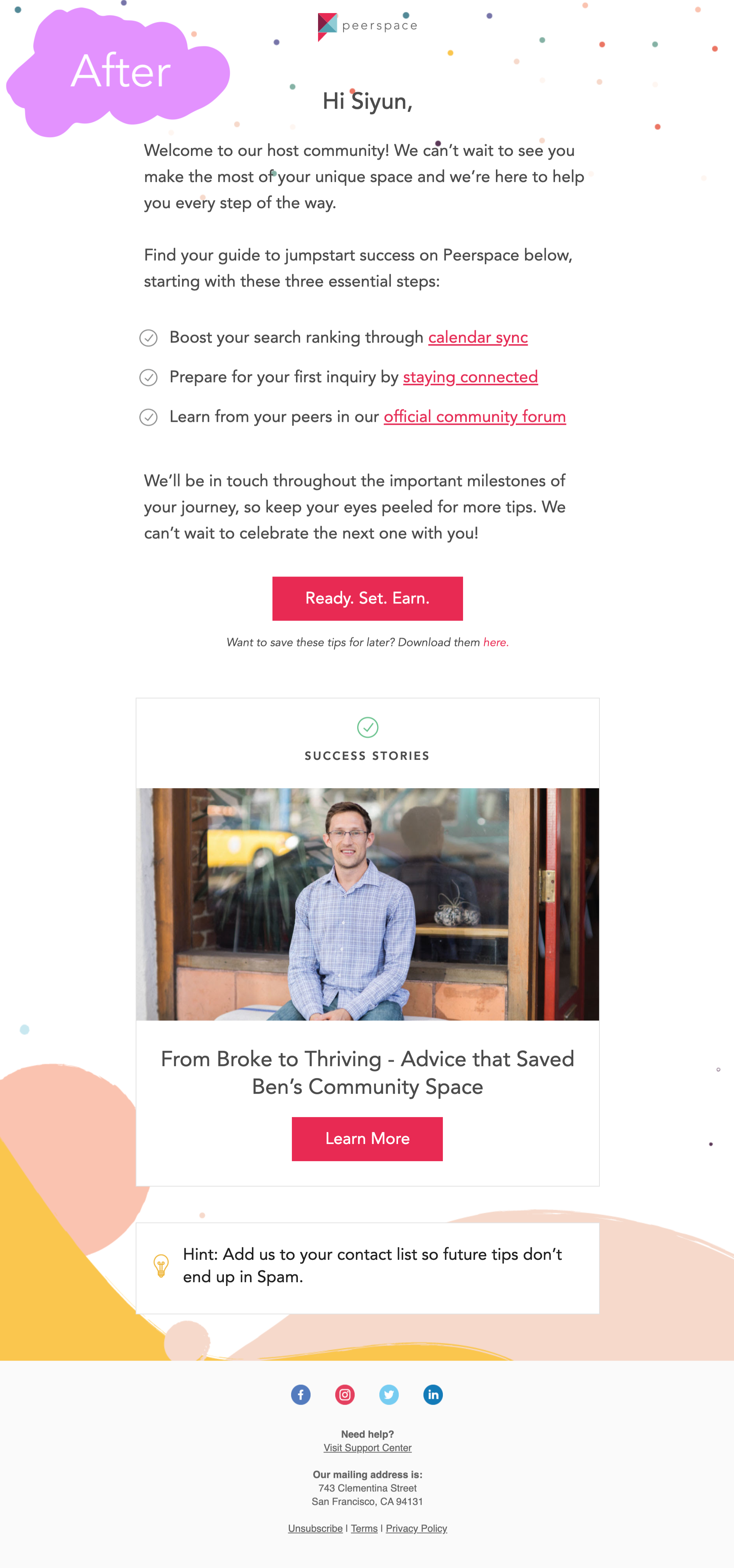
Relaunch onboarding tutorial focused on requirements to go live and use lifecycle emails to educate hosts at milestone moments
Performance: We measured success by evaluating 1) how the updated tutorial impacted activation rate for new hosts and 2) engagement and conversion metrics for new emails.
Tutorial - overall activation rate improved by 4%; time to live (sign up to activation) dropped by three days
Emails - open rate remained steady (avg 71%), click rate improved by 4% (avg 21%)
*Success of the tutorial provided the framework and data to support product improvements (see V2 below)